-
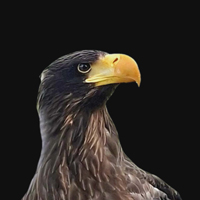
Stellers Sea Eagle
✴︎
Read more: Stellers Sea EagleThe Steller’s Sea Eagle is a colossal and majestic bird of prey of the North Pacific coast, renowned as one of the world’s largest and most powerful eagles. It is instantly recognizable by its enormous yellow beak, striking white shoulders and tail contrasting with dark brown plumage, and its specialization in hunting fish, particularly salmon, in coastal habitats and along frozen rivers. Key Characteristics:
-
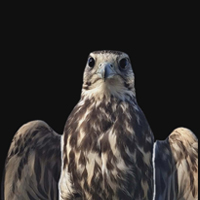
Saker Falcon
✴︎
Read more: Saker FalconThe Saker Falcon is a large, powerful falcon of the open steppes and deserts of Eurasia, renowned for its great speed, endurance in horizontal flight, and status as a traditional bird of falconry. With a robust build and variable plumage from dark brown to pale sandy, it is a formidable hunter of ground-dwelling prey, often taken in a low, swift pursuit over open terrain. Key Characteristics:
-
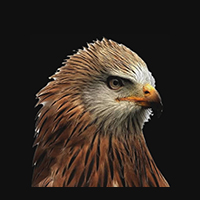
Red Kite
✴︎
Read more: Red KiteThe Red Kite is a graceful, medium-sized raptor of Europe and parts of Asia, renowned for its distinctive forked tail, chestnut-red plumage, and effortless, soaring flight. It is a highly adaptable scavenger and opportunistic hunter, often seen circling over open countryside and increasingly in urban areas, where its elegant silhouette and acrobatic skills are a hallmark. Key Characteristics:
-
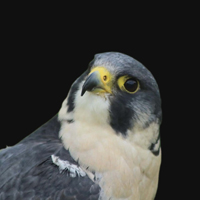
Peregrine Falcon
✴︎
Read more: Peregrine FalconThe Peregrine Falcon is a medium-sized, powerful falcon renowned as the fastest animal on Earth, reaching over 200 mph (320 km/h) in its signature hunting stoop (dive). With its iconic dark “helmet” and sleek, aerodynamic shape, it is a cosmopolitan predator that specializes in striking and capturing birds in mid-air, thriving in habitats from remote cliffs to urban skyscrapers. Key Characteristics:
-
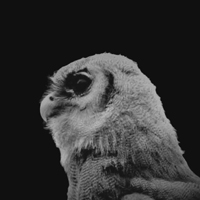
Milky Eagle Owl
✴︎
Read more: Milky Eagle OwlThe Milky Eagle-Owl is a very large, pale owl of the African savanna and woodlands, known for its impressive size, distinctive pinkish eyelids, and deep, booming calls. It is a powerful nocturnal predator that occupies a top ecological niche, often inhabiting rocky outcrops and riverine forests where it hunts a wide variety of prey. Key Characteristics:
-
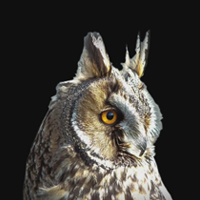
Long Eared Owl
✴︎
Read more: Long Eared OwlLong-eared Owls are slender, nocturnal owls known for their tall, closely-set ear tufts that resemble “ears,” cryptic camouflage for roosting in dense trees, and silent flight for hunting in open areas like meadows. Often communal in winter roosts, they are masters of concealment, using their narrow, vertical posture to vanish against tree trunks. Key Characteristics:
-
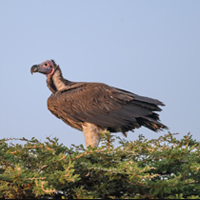
Lappet Faced Vulture
✴︎
Read more: Lappet Faced VultureThe Lappet-faced Vulture is a massive, powerful scavenger of Africa’s arid savannas, known for its huge, hooked beak, bare pink head with distinctive fleshy folds (lappets), and dominant role at carcasses. As Africa’s largest vulture, it uses its formidable size and strength to tear open tough hides and tendons, allowing smaller scavengers access to food and playing a crucial role in the ecosystem’s clean-up crew. Key Characteristics:
-
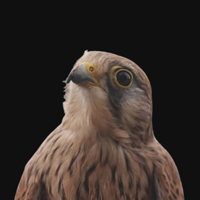
Kestrel
✴︎
Read more: KestrelThe Kestrel (often the Common or American Kestrel) is a small, colorful falcon renowned for its unique ability to hover in mid-air while hunting, using rapid wingbeats to hold position over open fields. Recognizable by its rusty plumage and distinctive facial markings, it is a diurnal hunter that feeds primarily on insects and small rodents, often seen perched on utility wires. Key Characteristics:
-
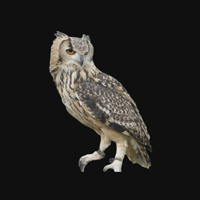
Indian Eagle Owl
✴︎
Read more: Indian Eagle OwlThe Indian Eagle-Owl is a large, powerful, and formidable owl of the Indian subcontinent, known for its prominent, outward-facing ear tufts, intense orange eyes, and stark brown-and-buff coloration. It is an adaptable nocturnal predator, often found in rocky scrubland and near human habitation, where its deep, booming calls are a distinctive sound of the night. Key Characteristics:
-
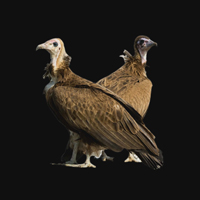
Hooded Vulture
✴︎
Read more: Hooded VultureThe Hooded Vulture is a small, slender vulture of sub-Saharan Africa, known for its distinctive bare, pinkish face and “hood” of feathers on the crown. It is a critically endangered scavenger that relies heavily on its keen eyesight to locate small scraps of carrion and other waste, often feeding in loose groups and playing a vital role in ecosystem cleanup. Key Characteristics:
