
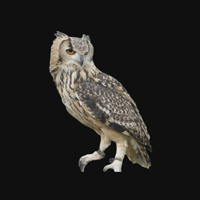

The Indian Eagle-Owl is a large, powerful, and formidable owl of the Indian subcontinent, known for its prominent, outward-facing ear tufts, intense orange eyes, and stark brown-and-buff coloration. It is an adaptable nocturnal predator, often found in rocky scrubland and near human habitation, where its deep, booming calls are a distinctive sound of the night.
Key Characteristics:
- Appearance: Very large, heavily built owl with long, conspicuous black ear tufts that are often held slanting outward. Plumage is sandy brown with heavy dark streaking and barring. Has a prominent white throat patch and striking, bright orange eyes.
- Senses: Excellent night vision and acute, directional hearing for locating prey in darkness. The facial disc helps funnel sound.
- Movement: Powerful, deep wingbeats in flight. Typically hunts from a perch, dropping silently onto prey. Roosts by day on sheltered cliff ledges or in large trees.
- Diet: Carnivore with a broad diet. Takes mammals (rodents, hares), birds (up to peafowl size), reptiles, and large insects. An apex nocturnal predator.
- Behavior: Nocturnal and territorial. Pairs are monogamous and often use the same nesting site (a cliff scrape or old nest) for years. Known for its deep, resonant, two-note call (“hoo-hoo…”).
- Habitat: Found across the Indian subcontinent. Prefers open scrubland, rocky gullies, ravines, and forest edges. Increasingly adapts to cultivated areas and outskirts of villages.