
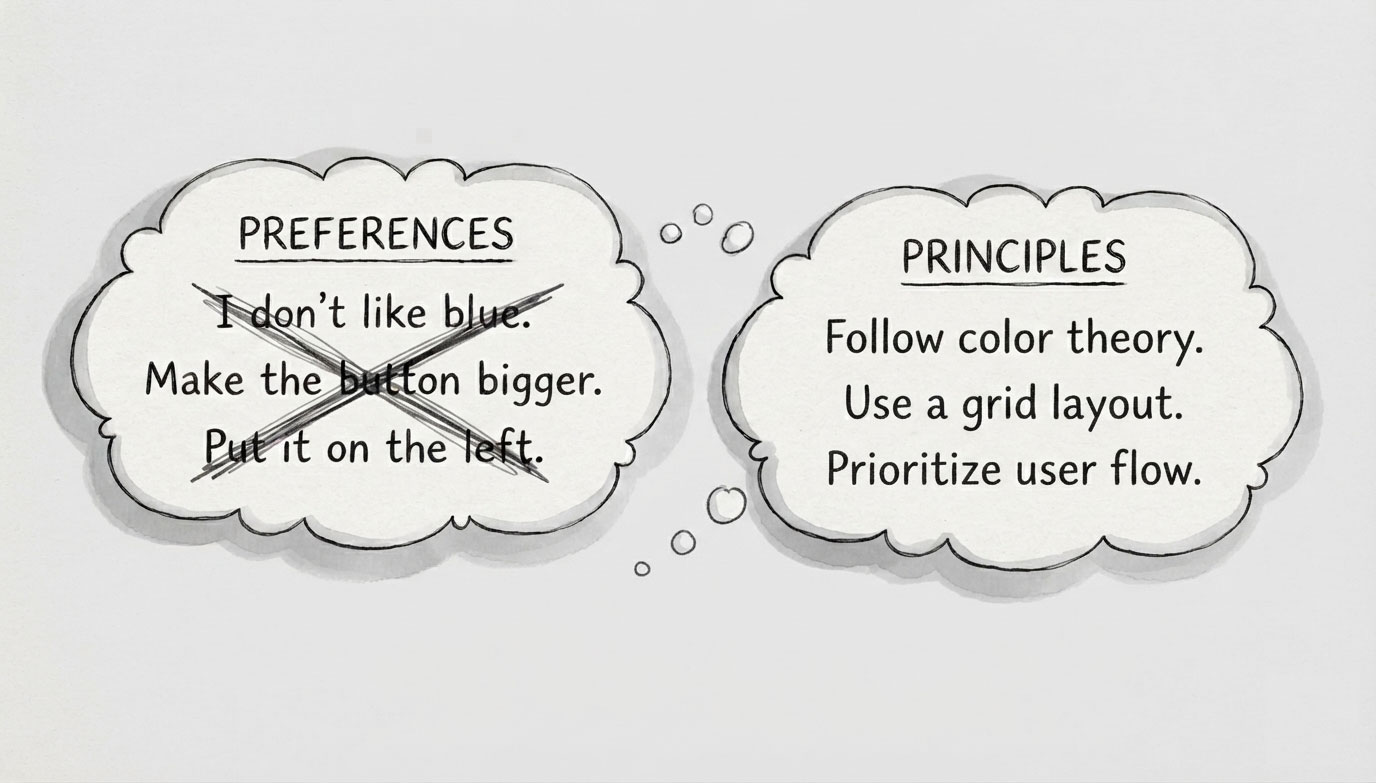

One of the biggest misconceptions about design is that it’s purely subjective.
You’ll often hear people say things like:
“I don’t like blue.”
“Can we make the button bigger?”
“I think this would look better on the left.”
There’s nothing wrong with having preferences. We all have them. Some people love minimal designs, while others enjoy bold colors and rich illustrations. Personal taste will always play a role in creative work.
But good design doesn’t begin with what we like. It begins with understanding what users need.
Imagine you’re designing a staircase. You wouldn’t ask everyone what height they prefer for each step. You’d follow measurements that are comfortable and safe for most people. That’s because the goal isn’t to create the most artistic staircase—it’s to create one that people can use naturally without thinking.
Digital products are no different. The best interfaces don’t succeed because the designer had great taste. They succeed because they respect how people naturally see, think, remember, and make decisions.
People notice larger elements before smaller ones. They group related things together. They expect buttons to look clickable. They get overwhelmed when presented with too many choices. They feel more confident when an interface behaves consistently. None of these are opinions.
They’re patterns of human behavior that designers have observed for decades. That’s why experienced designers rarely defend a decision by saying, “Because I like it.” Instead, they’ll explain why a particular choice helps users complete a task more easily. Design becomes much easier when conversations shift from preferences to purpose.
Instead of asking:
“Do you like this layout?”
Ask:
“Can users quickly find what they’re looking for?”
Instead of debating whether a button should be blue or green, ask:
“Can people immediately recognize this as the primary action?”
Instead of asking whether an animation looks cool, ask:
“Does it help users understand what’s happening?”
These questions lead to better products because they’re focused on people, not opinions. The wonderful thing about design principles is that they give us a common language. Rather than saying, “I just have a feeling this is better,” we can explain our decisions using ideas that are rooted in how people interact with the world. That doesn’t remove creativity. It gives creativity direction.
Think of a musician. Before composing beautiful music, they learn rhythm and harmony. An architect studies physics before designing a breathtaking building. A chef understands how ingredients work together before creating a signature dish. Design is no different. The principles aren’t there to limit creativity—they’re what make creativity useful.
When you understand the principles, your decisions become intentional instead of accidental. And that’s often the difference between a product that simply looks attractive and one that people genuinely enjoy using.
Leave a Reply